Carpet cleaners buy from the distributor who has the right product on the shelf when they need it. This guide explains the two main carpet cleaning methods, the role each chemical plays and the spotters your customers ask for most. By the end, you will know which carpet extraction chemicals and encapsulation products belong in a well-rounded carpet line.
 Hot water extraction vs. low-moisture encapsulation
Hot water extraction and encapsulation are the two methods most commercial carpet cleaners use. Extraction is a deep clean that flushes soil out of the carpet, while encapsulation is a low-moisture clean that traps soil so it can be vacuumed away.
How hot water extraction works
With extraction, a technician applies a pre-spray, lets it dwell and then rinses the carpet with a machine that sprays solution and pulls it back out. The machine removes loosened soil along with the water. Extraction is the go-to method for heavy soil, restorative cleaning and residential jobs.
How encapsulation works
With encapsulation, a technician applies a cleaner that surrounds soil particles and dries to a brittle crystal. The dried residue, along with the soil, is removed by regular vacuuming. Because it uses little water, carpet dries fast, which makes encapsulation popular for offices and other commercial spaces that need quick turnaround.
Many of your customers use both. They encapsulate on a regular schedule and extract a few times a year, so stocking both kinds of products keeps them buying from you.
The role of pre-sprays
A carpet pre-spray breaks down soil before the main cleaning step. It does most of the heavy lifting, so the extraction or encapsulation step can finish the job.
High pH pre-sprays work well on heavy traffic lanes and oily soil. Enzyme pre-sprays target grease and protein soils, such as food spills in restaurants. In the CUI line, Ultra Pre-Spray and Rush Hour cover traffic lanes, and Bio-Powder covers grease and protein soils. Stocking at least one general pre-spray and one specialty option lets your customers match the product to the job.
Boosters, rinses and defoamers
Boosters, rinses and defoamers are the support products that make extraction work better. They are easy to overlook, but cleaners who use them get better results and fewer callbacks.
Boosters
A booster adds cleaning power to a pre-spray or extraction detergent on tough jobs. Citrus boosters are a common choice for oily soil and asphalt track-in.
Extraction detergents and rinses
An extraction detergent goes in the machine to lift and carry soil out. An acidic rinse, such as Fiber Rinse, neutralizes leftover alkalinity and leaves fibers pH-balanced and soft. That helps prevent browning and the sticky residue that makes carpet resoil quickly.
Defoamers
Foam from old detergent residue can damage a machine’s vacuum motor. A defoamer like De-Foam knocks down foam so the equipment keeps running. Techs who clean carpets that were shampooed in the past reach for this product often.
 Spotters by stain type
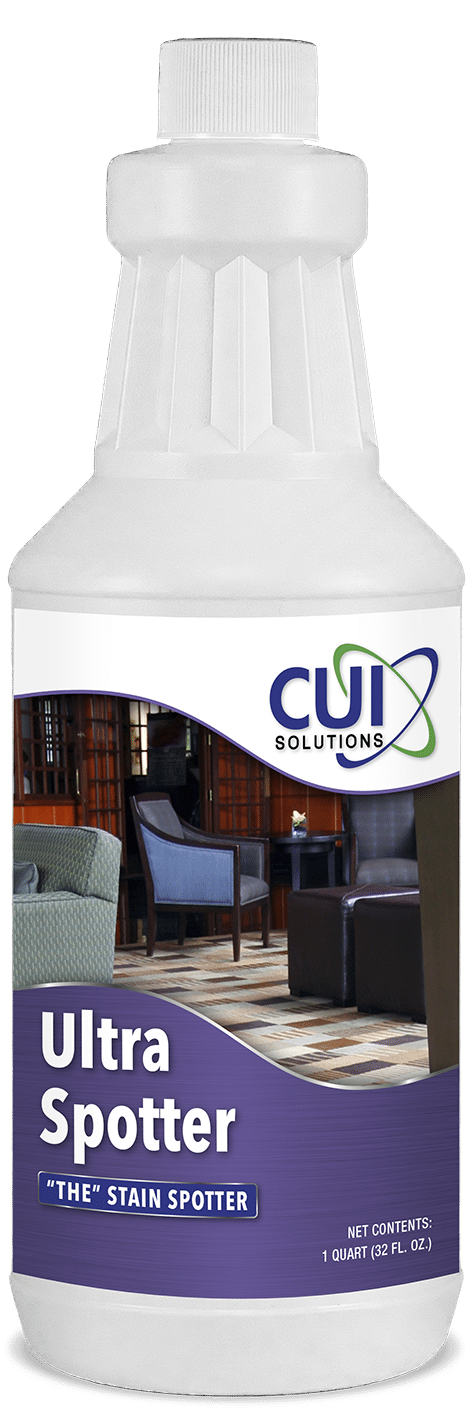
Spotters are small, but they sell steadily because every job has a few stubborn spots. The key is to stock spotters by stain type instead of one all-purpose bottle.
- Oil and grease spotters for kitchen and shop track-in
- Paint, oil and grease solvent spotters for tougher spots
- Gum and tar removers for entryways and parking areas
- Synthetic red dye removers for drinks and food dyes
- Coffee and tea removers for offices and break rooms
- Urine stain removers for homes and pet areas
A clear spotter set helps your customers fix problems on the spot, which keeps their own customers happy. You can see the full spotter range on the CUI carpet care product page.
Encapsulation carpet cleaning chemicals to stock
Encapsulation carpet cleaning chemicals usually come in two forms. Extraction-style encapsulators, such as Encap! Extraction, can be applied with a sprayer or an extraction machine and then agitated. Bonnet cleaners, such as Encap! Bonnet and Bonn-It Clean, are used with a rotary machine and a cleaning pad.
If your customers serve offices, schools or retail spaces, these products often become their weekly or monthly maintenance chemicals. That means steady reorders for you.
Which carpet extraction chemicals to stock first
A strong carpet line covers the full job: a pre-spray, an extraction detergent, a rinse, an encapsulator, a defoamer and a spotter set. With those six pieces, your customers can handle most commercial and residential work with products from one source.
If you sell under your own brand, a carpet line is a good place to start. Carpet products are used often, and cleaners stay loyal to products that work. CUI Solutions makes and private labels a full carpet line with a 10-unit minimum per product, so you can start with the core items and add more later. Learn how the private label cleaning products program works, or see how chemical co-packing fits your plans.
Matching products to your customers’ accounts
The right mix depends on who your customers clean for. Asking a few questions about their work helps you recommend products they will reorder.
Commercial accounts
Customers who clean offices, schools and retail stores need fast dry times and steady maintenance. Lead with an encapsulator, a bonnet cleaner, a traffic lane pre-spray and a basic spotter set.
Residential and restoration work
Customers who clean homes or handle heavy soil rely on extraction. Lead with a strong pre-spray, an extraction detergent, an acidic rinse, a defoamer and specialty spotters for pet and food stains.
Food service and hospitality
Restaurants and hotels see grease, food and drink spills. An enzyme pre-spray, a citrus booster and coffee and red dye spotters fit these accounts well.
Put Your Brand on a Carpet Line
If you want to offer carpet extraction chemicals under your own name, contact CUI Solutions or call 816-471-3602. The team can help you pick the right products and sizes for your customers.